KITKAT has been part of people’s breaks for generations, but the way we enjoy those breaks has continued to change.
What began as a chocolate-covered wafer made for workers’ packed lunches has grown into a range of flavours, formats and experiences designed around different tastes and occasions. Through those changes, the heart of KITKAT has remained familiar: smooth chocolate, crispy wafer and a product made to be broken and enjoyed as part of a well-earned pause.
That makes KITKAT a useful example of how chocolate has evolved over time. Rather than moving away from the original idea, we have built new layers around it, giving people more ways to enjoy a KITKAT while keeping the distinctive break experience recognisable.
Where the KITKAT story began
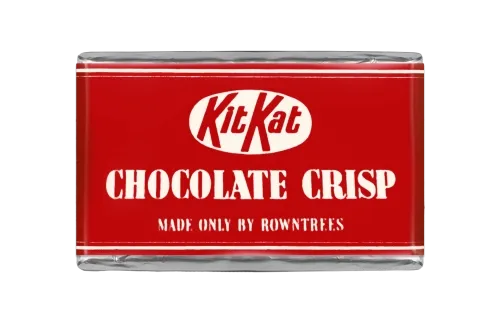
Our story begins in 1935, when the product launched as Chocolate Crisp. The idea followed a suggestion from a Rowntree’s factory worker in York, who asked why a chocolate bar could not be made to fit into workers’ packed lunches.
The resulting four-finger bar was affordable, portable and portioned for everyday enjoyment. Its finger format and distinctive snap helped it stand out, while the action of breaking off a finger began to connect the product with the break occasion.
In 1937, Chocolate Crisp became KITKAT. Then, in 1958, “Have a Break, Have a KITKAT” gave the product an even clearer role in everyday life. KITKAT was no longer simply a chocolate-covered wafer. The shape, snap and breaking action all became part of a familiar break ritual.
From one chocolate break to more choice
The original KITKAT idea was simple: chocolate-covered wafer that was convenient to carry, easy to portion and satisfying to eat. That foundation still matters today.
The balance of smooth chocolate and crispy wafer creates an indulgent experience, while the distinctive shape creates a ritualised way to enjoy the product. This gives KITKAT a strong foundation that can adapt as consumer choice expands.
Today, consumers can choose from many brands, flavours and formats across supermarkets, convenience stores and vending machines. The response has not been to replace the classic KITKAT, but to create more choice around it.
New flavours, same recognisable break
One of the clearest ways KITKAT has evolved is through flavour. Alongside the familiar milk chocolate bar, the UK range has included white, hazelnut, salted caramel, orange and coffee-flavoured variations.
These options allow people to choose a KITKAT that reflects what they fancy in that moment. Someone may want the comfort of a classic milk chocolate break, while someone else may prefer a sweeter white coating, a nutty flavour or a coffee-inspired twist.
The flavour may change, but the crispy wafer, recognisable branding and connection with taking a break keep the experience rooted in KITKAT. This matters in confectionery, where taste, experience and emotional associations all influence which product consumers choose.
New formats for different consumer needs
The evolution has also happened through format. The classic two-finger and four-finger bars support familiar, everyday breaks, but different formats can meet different needs and occasions.
| Format | How it changes the classic idea | Consumer need or occasion |
| Four-finger | The heritage format. | An out of home break. |
| Two-finger | The small, portioned break. | An in home break. |
| KITKAT Chunky | A thicker, single-bar format with a bigger bite | An on the go break and a bigger bite. |
| Multipacks | Individually wrapped bars sold together, it could be a KITKAT two finger, a four finger or a chunky. | Convenience for keeping at home, taking to work or enjoying across several breaks |
| KITKAT tablet formats | A larger bar designed to break apart and share | Indulgent, shareable breaks at home, after work or at the weekend |
Some formats naturally change the ritual. KITKAT Chunky, for example, is built around a bigger bite rather than the traditional multi-step finger ritual. The experience is different, but it still aims to make the product engaging and enjoyable within a break.
The KITKAT range has also expanded into larger tablet formats designed for indulgent, shareable breaks at home. This allows the familiar chocolate-and-wafer experience to meet different occasions, including end-of-day and weekend breaks.
Evolving with what consumers need from a break
The biggest change may not be the move from one flavour or format to another. It is the way people’s break needs have changed.
KITKAT was originally created around a practical need: workers wanted an affordable, portable chocolate bar that fitted into a packed lunch. Today, many people take breaks while still checking emails, scrolling on their phones or multitasking. The current brand mission recognises this tension and focuses on helping people “break better”.
New products and formats can support that mission by making different breaks more enjoyable. A compact finger bar can suit a quick individual pause. A Chunky bar can provide a bigger bite. A multipack can keep familiar breaks within easy reach, while a Sharing Bar can turn an evening treat into a moment of connection.
In this way, innovation is not simply about creating another flavour. It is about understanding when, where and how people want to enjoy chocolate, then adapting KITKAT to fit that occasion without losing the brand’s recognisable identity.
What has stayed the same?
Even as we introduce new flavours and formats, a modern KITKAT is still recognisably part of the same brand.
The KITKAT name and logo, red colour, distinctive shape, finger snap, break ritual and “Have a Break, Have a KITKAT” line help connect new products with the brand consumers already know.
That consistency gives us room to evolve. Consumers can try a new coating, a bigger bite or a sharing format while still understanding what KITKAT stands for: an enjoyable pause from the day.
From Chocolate Crisp to the KITKAT of today
The history of KITKAT shows that evolution does not have to mean completely reinventing a product.
KITKAT began with a clear consumer need and a simple product idea. Over time, we have developed new flavours, formats and break occasions around that idea while protecting the distinctive chocolate-and-wafer experience at its centre.
From the original four-finger Chocolate Crisp to KITKAT Chunky, flavour variations and Sharing Bars, KITKATS story shows how we have continued to adapt to people’s lives while staying true to the break at the heart of the brand.
FAQ
When did KITKAT begin?
KITKATS story began in 1935 with Chocolate Crisp. The product became KITKAT in 1937, and “Have a Break, Have a KITKAT” followed in 1958.
How has KITKAT changed over time?
KITKAT has evolved through new flavours, different finger and bar sizes, Chunky products, multipacks and Sharing Bars. These changes create more choice for different tastes, appetites and break occasions while keeping the crispy wafer and break idea at the heart of the brand.
Why does KITKAT offer different formats?
Different formats can fit different consumer needs. A finger bar works well for an individual pause, Chunky offers a bigger bite, multipacks provide convenience, and Sharing Bars support more social evening occasions.
What makes a KITKAT still feel like KITKAT?
The balance of chocolate and crispy wafer, distinctive shape, red branding, finger snap, break ritual and famous tagline all help keep the experience recognisable.